Some design books teach you how to align text.
Others teach you how to choose a typeface.
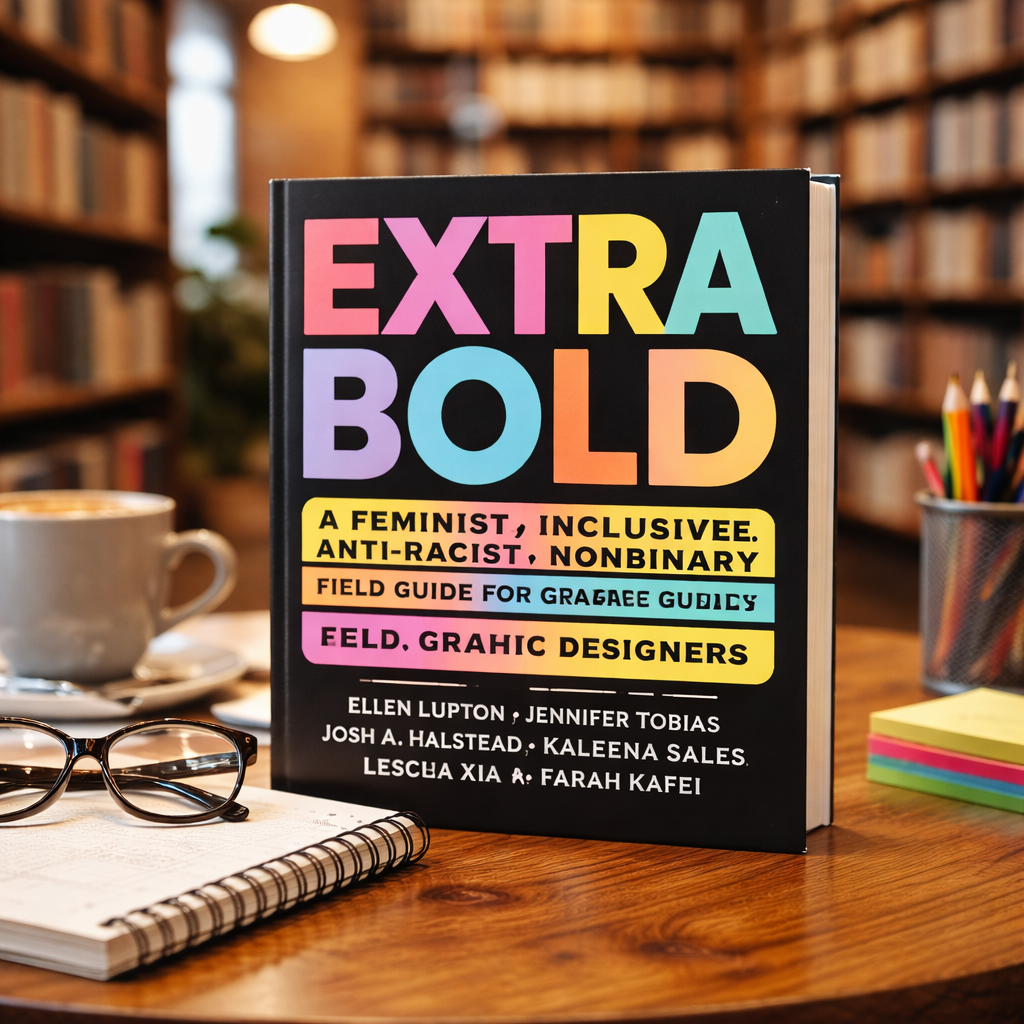
Extra Bold: A Feminist, Inclusive, Anti-Racist, Nonbinary Field Guide for Graphic Designers does something far more interesting: it asks who design has historically been built for—and who it has left out.
Edited by Ellen Lupton with a diverse group of contributors, the book isn’t a traditional manual. It’s a field guide for redesigning the culture of design itself.
Why this book matters?
Graphic design shapes how we understand the world—through typography, imagery, branding, interfaces, and information systems.
But for decades, design education has quietly carried assumptions about:
who gets credit
whose aesthetics are considered “professional”
who has access to creative careers
whose stories get visualized
Extra Bold challenges those assumptions.
It explores how power, identity, and representation show up in design practice—from hiring and mentorship to typography, accessibility, and authorship.
And it does so through essays, interviews, practical exercises, and visual experiments.
In other words: it’s not just theory. It’s a toolkit for change.
What makes it different?
Instead of presenting design as neutral or purely aesthetic, the book treats it as a social practice—one that shapes culture and institutions.
It asks questions that design education often avoids:
Who gets to call themselves a designer?
Who is excluded from design spaces?
How do visual systems reinforce or challenge power?
What does inclusive design actually look like in practice?
The tone is collaborative, curious, and forward-looking rather than prescriptive.
Why you should read it>
Read this book if you are:
a designer or creative professional wanting to rethink your practice
a student entering the design world
a leader building creative teams
or anyone interested in how visual culture shapes society
It will expand how you think about authorship, accessibility, collaboration, and representation in design.
The bigger takeaway…
Design is never just decoration.
It is infrastructure for communication—the visual language that shapes how ideas move through the world.
Extra Bold reminds us that if design shapes culture, then designers also carry the power—and responsibility—to reshape it.
And that makes the book less like a manual and more like an invitation:
What would design look like if more people had the tools, the voice, and the space to participate in creating it?