Some books entertain you.
Some books inform you.
And a few quietly rearrange the way you see the world.
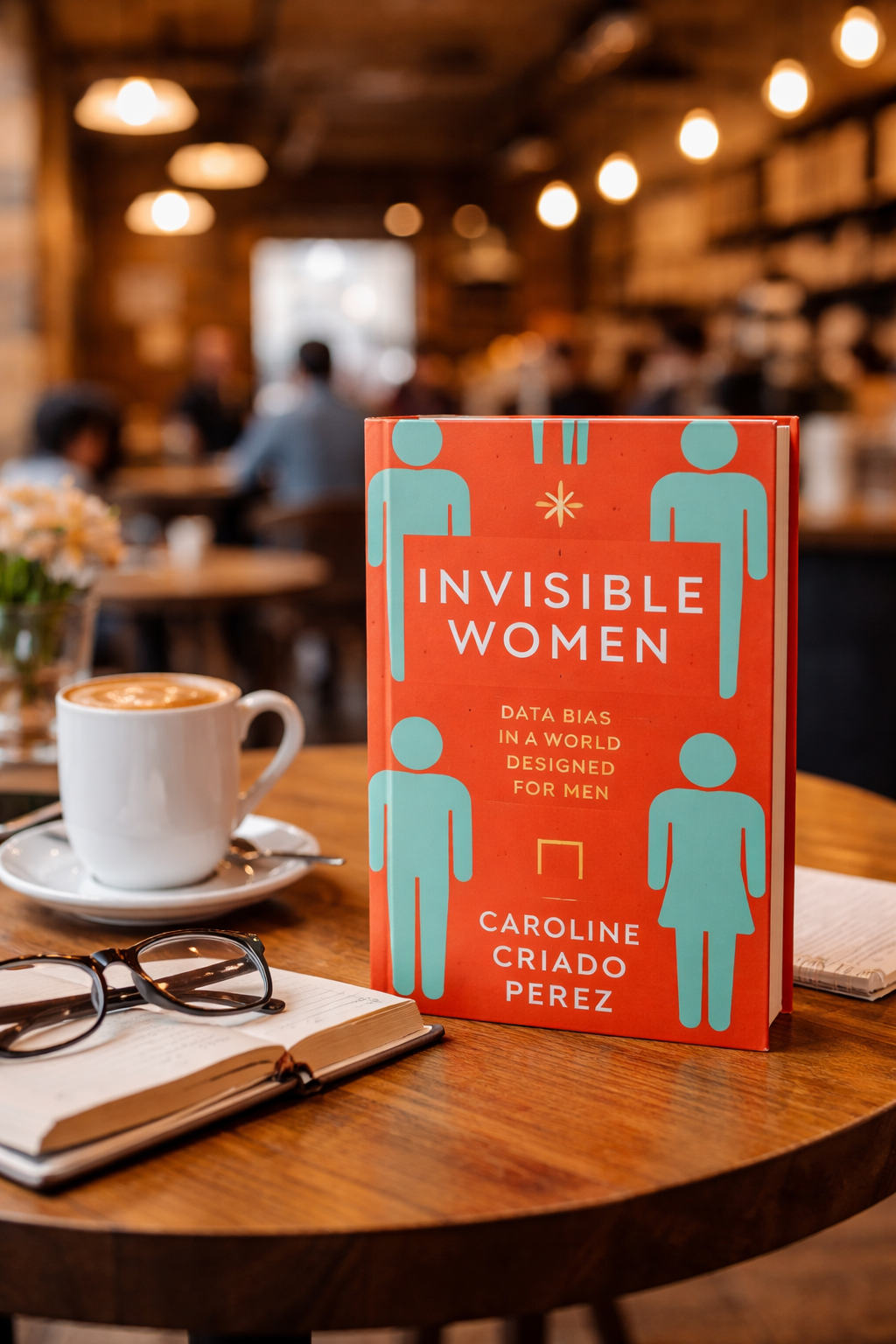
Invisible Women: Data Bias in a World Designed for Men by Caroline Criado Perez is one of those rare books that pulls a curtain back—and once you see what’s behind it, you can’t unsee it.
Why this book matters
The central argument is deceptively simple: much of the world is designed using data that treats men as the default human.
That “default” quietly shapes everything around us:
Medical research that historically relied on male bodies as the standard test subject
Urban planning that overlooks how women move through cities
Workplace policies built around male career patterns
Technology and safety systems designed using male body data
The result isn’t always malicious.
Often it’s something more dangerous: invisible bias hidden inside supposedly neutral systems.
And when the data is incomplete, the consequences become real.
Women receive less accurate medical diagnoses.
Car safety systems are less protective for female bodies.
Public transportation planning ignores caregiving travel patterns.
Even smartphones and voice-recognition systems historically performed worse for female voices.
Neutrality, it turns out, can quietly reproduce inequality.
What makes the book powerful
Criado Perez doesn’t rely on ideology.
She relies on evidence.
The book compiles research from economics, medicine, urban design, technology, and public policy. Page after page shows how data gaps create systemic blind spots—not because women are intentionally excluded, but because the system never thought to include them.
It’s less a rant and more an investigation.
And that makes it harder to dismiss.
Why you should read it
Read this book if you want to understand:
how data shapes power
why “objective systems” sometimes fail half the population
how better data can lead to better design, better policy, and safer lives
It changes how you read statistics, how you evaluate research, and how you think about the systems we call “neutral.”
And here’s the quiet twist:
once you start noticing the gaps, they appear everywhere.
The bigger takeaway
The book isn’t arguing that the world is intentionally hostile to women.
It argues something subtler:
A world designed without you in the data will eventually design you out of the outcome.
That’s not ideology.
That’s mathematics.
And fixing it isn’t about politics—it’s about better information, better design, and better decisions.